WhenToBird

Polioptila caerulea · Polioptilidae

When Do Blue-gray Gnatcatchers Arrive in Florida?

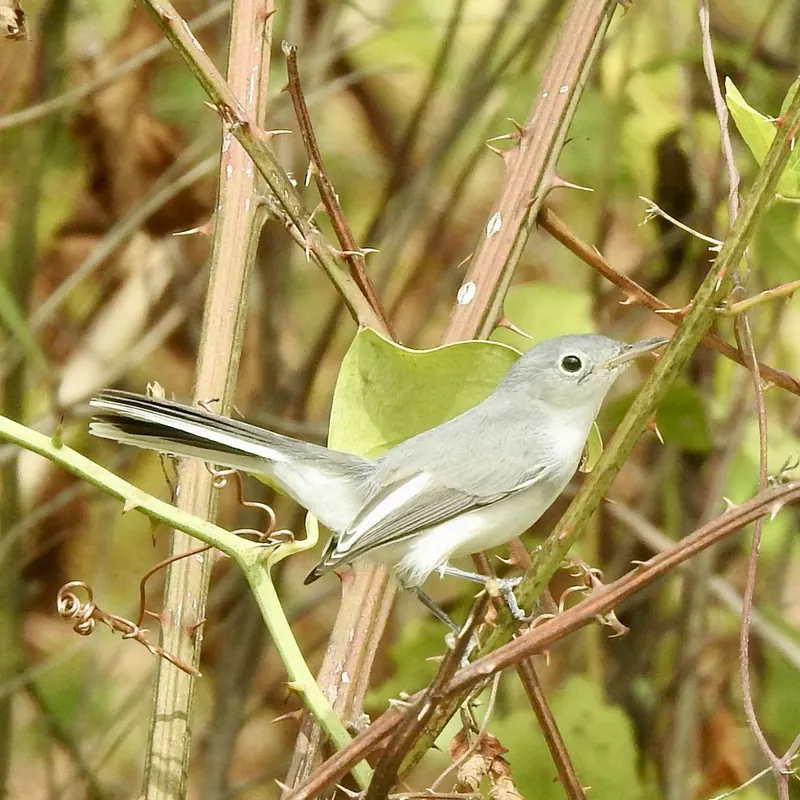
Adult Blue-gray Gnatcatcher
Photo: Laura Clark, CC BY 4.0 via iNaturalist

Blue-gray Gnatcatchers are in Florida all year, but most are here in fall: numbers build from early September, peak in early October (49% of checklists), and fall back by early February. In the quietest week (early July) they are still on about 11% of checklists.

When to look

Numbers buildSep 1-7early September
PeakOct 1-7early October
Fall back byFeb 1-7early February
FewestJul 1-7early July

Best: early October. Here all year; numbers build from early September and fall back by early February. Peak: on about 49% of Florida checklists.

  1. Jancommon
  2. Febcommon
  3. Marcommon
  4. Apruncommon
  5. Mayuncommon
  6. Jununcommon
  7. Juluncommon
  8. Augcommon
  9. Seppeak season
  10. Octpeak season
  11. Novpeak season
  12. Decpeak season

Darker months: more checklists report it. Outlined: peak month.

0%20%40%60%Jan 1-7: 33% of 74446 checklistsJan 8-14: 32% of 60074 checklistsJan 15-21: 33% of 62945 checklistsJan 22-31: 31% of 84954 checklistsFeb 1-7: 32% of 59204 checklistsFeb 8-14: 30% of 63259 checklistsFeb 15-21: 27% of 77150 checklistsFeb 22-28: 30% of 62850 checklistsMar 1-7: 26% of 58560 checklistsMar 8-14: 21% of 57756 checklistsMar 15-21: 18% of 54898 checklistsMar 22-31: 18% of 76702 checklistsApr 1-7: 18% of 55096 checklistsApr 8-14: 18% of 55892 checklistsApr 15-21: 17% of 59358 checklistsApr 22-30: 16% of 73124 checklistsMay 1-7: 16% of 47915 checklistsMay 8-14: 15% of 44114 checklistsMay 15-21: 15% of 31858 checklistsMay 22-31: 14% of 40723 checklistsJun 1-7: 12% of 31668 checklistsJun 8-14: 12% of 27802 checklistsJun 15-21: 11% of 26698 checklistsJun 22-30: 10% of 32346 checklistsJul 1-7: 10% of 23826 checklistsJul 8-14: 11% of 23071 checklistsJul 15-21: 12% of 22903 checklistsJul 22-31: 14% of 32952 checklistsAug 1-7: 16% of 25093 checklistsAug 8-14: 20% of 24888 checklistsAug 15-21: 23% of 26030 checklistsAug 22-31: 29% of 38612 checklistsSep 1-7: 35% of 31023 checklistsSep 8-14: 42% of 30022 checklistsSep 15-21: 46% of 31611 checklistsSep 22-30: 49% of 42108 checklistsOct 1-7: 49% of 36219 checklistsOct 8-14: 48% of 43113 checklistsOct 15-21: 48% of 40987 checklistsOct 22-31: 45% of 53457 checklistsNov 1-7: 40% of 38587 checklistsNov 8-14: 39% of 39208 checklistsNov 15-21: 37% of 39729 checklistsNov 22-30: 38% of 54965 checklistsDec 1-7: 38% of 42070 checklistsDec 8-14: 36% of 43424 checklistsDec 15-21: 36% of 50581 checklistsDec 22-31: 36% of 82405 checklistsJanFebMarAprMayJunJulAugSepOctNovDec
Share of complete checklists reporting it, by week (4 per month). Grey bars: fewer than 10 checklists, not counted.

Frequency is the share of complete checklists in Florida that listed the bird, 2016–2025. It is not a head count, and it follows where and when people go birding. How to read it.

JanFebMarAprMayJunJulAugSepOctNovDec
today
Second week of November

Each county is shaded by the share of complete checklists there that listed the bird, blended with the weeks either side. Darker is more often. It follows where people watch birds, not how many birds there are. How to read it.

Embed this map on your site

Where in Florida

Best counties

Share of checklists at the peak
  1. Hardee CountyBest late October · 27 checklists that week, 1,078 in all73%
  2. Broward CountyBest mid September · 915 checklists that week, 57,530 in all70%
  3. Miami-Dade CountyBest late September · 2069 checklists that week, 118,849 in all69%
  4. Glades CountyBest early October · 22 checklists that week, 6,182 in all69%
  5. Collier CountyBest early October · 944 checklists that week, 84,200 in all68%
  6. DeSoto CountyBest early October · 16 checklists that week, 2,154 in all66%

Best spots

Share of checklists at the peak
  1. Kendall Green ParkMiami-Dade County, best late September · 23 checklists that week, 581 in all100%
  2. Kendale Lakes ParkMiami-Dade County, best late September · 26 checklists that week, 665 in all100%
  3. Newnans Lake State ForestAlachua County, best mid September · 29 checklists that week, 553 in all99%
  4. Sugden Regional ParkCollier County, best early October · 25 checklists that week, 1,655 in all99%
  5. Shingle Creek Regional ParkOsceola County, best mid October · 20 checklists that week, 486 in all98%
  6. Halpatiokee Regional Park Conservation AreaMartin County, best late September · 26 checklists that week, 482 in all98%

Busy spots report more of everything; compare the checklist counts before you drive anywhere.

Best time of day

In Florida, the Blue-gray Gnatcatcher is most often listed on checklists started between 7 and 9 am (36% of those checklists).

0%10%20%30%40%12 am: too few checklists (771) to judge1 am: too few checklists (771) to judge2 am: too few checklists (701) to judge3 am: too few checklists (752) to judge4 am: too few checklists (1378) to judge5 am: too few checklists (9462) to judge6 am: 29% of 94591 checklists7 am: 37% of 296183 checklists8 am: 35% of 319987 checklists9 am: 31% of 254830 checklists10 am: 28% of 209480 checklists11 am: 26% of 163924 checklists12 pm: 26% of 133478 checklists1 pm: 25% of 125012 checklists2 pm: 25% of 125299 checklists3 pm: 25% of 131072 checklists4 pm: 24% of 134410 checklists5 pm: 18% of 113373 checklists6 pm: 14% of 69886 checklists7 pm: too few checklists (37509) to judge8 pm: too few checklists (8966) to judge9 pm: too few checklists (2093) to judge10 pm: too few checklists (1485) to judge11 pm: too few checklists (862) to judge12a3a6a9a12p3p6p9p
Share of checklists started in each local hour that reported it. It reflects when people go birding as well as when birds are active. Grey hours have too few checklists (under 2% of the state’s, or under 200) to judge.
Week-by-week table
MonthDays 1-78-1415-2122-end
January33%32%33%31%
February32%30%27%30%
March26%21%18%18%
April18%18%17%16%
May16%15%15%14%
June12%12%11%10%
July10%11%12%14%
August16%20%23%29%
September35%42%46%49%
October49%48%48%45%
November40%39%37%38%
December38%36%36%36%

Neighboring states

  • Georgia: arrives late February, 23 weeks later than Florida
  • South Carolina: arrives late February, 23 weeks later than Florida
  • Alabama: arrives early March, 24 weeks earlier than Florida
  • Mississippi: arrives late March, 21 weeks earlier than Florida

Common questions

When do Blue-gray Gnatcatchers arrive in Florida?
Blue-gray Gnatcatchers are in Florida all year, but most are here in fall: numbers build from early September, peak in early October (49% of checklists), and fall back by early February. In the quietest week (early July) they are still on about 11% of checklists.
When do Blue-gray Gnatcatchers leave Florida?
Blue-gray Gnatcatchers never fully leave Florida: numbers fall back below half their usual rate by early February, but some are still reported in every week, about 11% of checklists at the low.
When is the best time to see a Blue-gray Gnatcatcher in Florida?
The Blue-gray Gnatcatcher is reported most often in early October, on about 49% of Florida checklists.
Where in Florida are Blue-gray Gnatcatchers seen most often?
By county, Hardee County, Broward County, and Miami-Dade County have the highest peak reporting rates for the Blue-gray Gnatcatcher (counties with at least 200 checklists).