WhenToBird

Nannopterum auritum · Phalacrocoracidae

When Do Double-crested Cormorants Arrive in Tennessee?

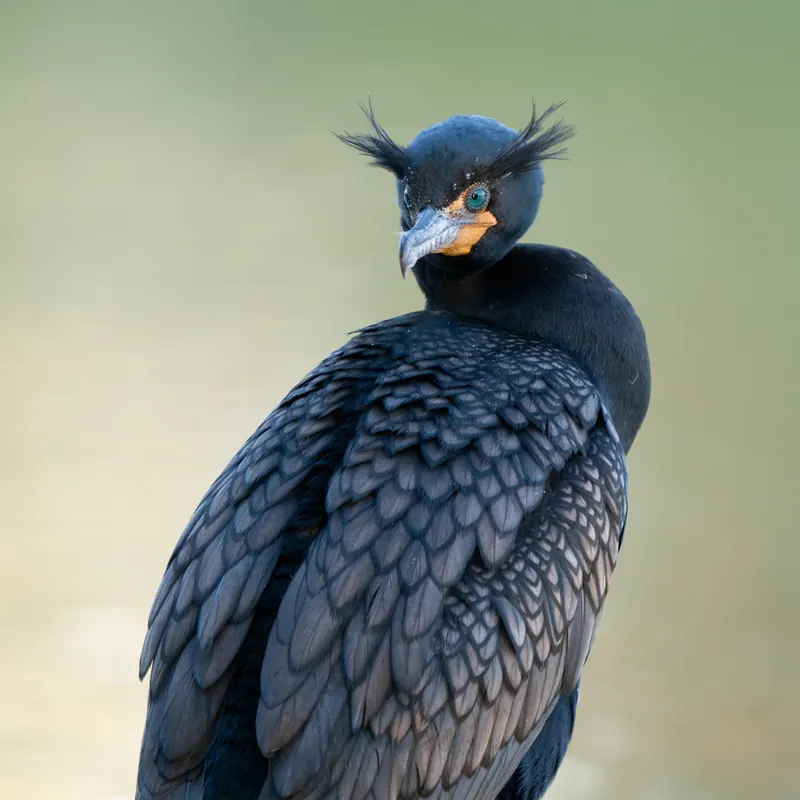
Adult Double-crested Cormorant
Photo: jubileej, CC0 1.0 via iNaturalist

Double-crested Cormorants are in Tennessee all year, but most are here in fall: numbers build from mid June, peak in late August (16% of checklists), and fall back by mid November. In the quietest week (the second week of January) they are still on about 4.1% of checklists.

When to look

Numbers buildJun 15-21mid June
PeakAug 22-31late August
Fall back byNov 15-21mid November
FewestJan 8-14the second week of January

Best: late August. Here all year; numbers build from mid June and fall back by mid November. Peak: on about 16% of Tennessee checklists.

  1. Januncommon
  2. Febcommon
  3. Marpeak season
  4. Aprpeak season
  5. Maycommon
  6. Juncommon
  7. Julpeak season
  8. Augpeak season
  9. Seppeak season
  10. Octpeak season
  11. Novpeak season
  12. Deccommon

Darker months: more checklists report it. Outlined: peak month.

0%5%10%15%20%Jan 1-7: 4.0% of 16696 checklistsJan 8-14: 4.1% of 13056 checklistsJan 15-21: 4.1% of 13646 checklistsJan 22-31: 4.4% of 18071 checklistsFeb 1-7: 5.7% of 13342 checklistsFeb 8-14: 4.5% of 14316 checklistsFeb 15-21: 4.8% of 20395 checklistsFeb 22-28: 8.4% of 13129 checklistsMar 1-7: 9.7% of 12701 checklistsMar 8-14: 11% of 12789 checklistsMar 15-21: 13% of 13599 checklistsMar 22-31: 13% of 20293 checklistsApr 1-7: 12% of 15779 checklistsApr 8-14: 12% of 16646 checklistsApr 15-21: 11% of 18625 checklistsApr 22-30: 11% of 26689 checklistsMay 1-7: 11% of 21054 checklistsMay 8-14: 11% of 19954 checklistsMay 15-21: 11% of 14494 checklistsMay 22-31: 11% of 17790 checklistsJun 1-7: 9.9% of 11344 checklistsJun 8-14: 9.6% of 11049 checklistsJun 15-21: 11% of 9625 checklistsJun 22-30: 11% of 11522 checklistsJul 1-7: 13% of 9208 checklistsJul 8-14: 13% of 8814 checklistsJul 15-21: 15% of 8887 checklistsJul 22-31: 14% of 12739 checklistsAug 1-7: 14% of 9632 checklistsAug 8-14: 15% of 9514 checklistsAug 15-21: 16% of 9619 checklistsAug 22-31: 17% of 14227 checklistsSep 1-7: 15% of 11988 checklistsSep 8-14: 14% of 11660 checklistsSep 15-21: 13% of 11774 checklistsSep 22-30: 14% of 15658 checklistsOct 1-7: 12% of 12641 checklistsOct 8-14: 12% of 12389 checklistsOct 15-21: 12% of 10249 checklistsOct 22-31: 13% of 14085 checklistsNov 1-7: 12% of 10700 checklistsNov 8-14: 13% of 10709 checklistsNov 15-21: 9.5% of 9955 checklistsNov 22-30: 8.6% of 13423 checklistsDec 1-7: 6.5% of 10106 checklistsDec 8-14: 6.3% of 10478 checklistsDec 15-21: 5.4% of 12177 checklistsDec 22-31: 4.4% of 17397 checklistsJanFebMarAprMayJunJulAugSepOctNovDec
Share of complete checklists reporting it, by week (4 per month). Grey bars: fewer than 10 checklists, not counted.

Frequency is the share of complete checklists in Tennessee that listed the bird, 2016–2025. It is not a head count, and it follows where and when people go birding. How to read it.

JanFebMarAprMayJunJulAugSepOctNovDec
today
Second week of November

Each county is shaded by the share of complete checklists there that listed the bird, blended with the weeks either side. Darker is more often. It follows where people watch birds, not how many birds there are. How to read it.

Embed this map on your site

Where in Tennessee

Best counties

Share of checklists at the peak
  1. Cocke CountyBest mid September · 125 checklists that week, 2,051 in all81%
  2. Houston CountyBest late July · 24 checklists that week, 1,234 in all68%
  3. Humphreys CountyBest the second week of July · 90 checklists that week, 5,858 in all65%
  4. Haywood CountyBest mid July · 40 checklists that week, 1,498 in all62%
  5. Hardin CountyBest early September · 31 checklists that week, 2,710 in all62%
  6. Benton CountyBest mid September · 41 checklists that week, 2,202 in all53%

Best spots

Share of checklists at the peak
  1. Old Hickory Recreation AreaSumner County, best late September · 20 checklists that week, 263 in all100%
  2. Butcher LakeAnderson County, best late March · 40 checklists that week, 297 in all99%
  3. Rankin Bottom Wildlife Management AreaCocke County, best the second week of August · 35 checklists that week, 779 in all98%
  4. Old Hickory Beach Access AreaDavidson County, best late May · 37 checklists that week, 2,489 in all98%
  5. Warriors PathSullivan County, best late October · 40 checklists that week, 1,694 in all97%
  6. Tennessee Valley Authority (TVA) (Swan Pond Creek)Roane County, best late March · 32 checklists that week, 767 in all97%

Busy spots report more of everything; compare the checklist counts before you drive anywhere.

Best time of day

In Tennessee, the Double-crested Cormorant is most often listed on checklists started between 11 am and 1 pm (12% of those checklists).

0%5%10%15%12 am: too few checklists (224) to judge1 am: too few checklists (253) to judge2 am: too few checklists (245) to judge3 am: too few checklists (267) to judge4 am: too few checklists (582) to judge5 am: too few checklists (5688) to judge6 am: 13% of 36828 checklists7 am: 9.3% of 72816 checklists8 am: 9.9% of 76910 checklists9 am: 10% of 69071 checklists10 am: 10% of 60943 checklists11 am: 12% of 52311 checklists12 pm: 11% of 46524 checklists1 pm: 11% of 41133 checklists2 pm: 9.9% of 40305 checklists3 pm: 9.9% of 41013 checklists4 pm: 9.7% of 40029 checklists5 pm: 9.2% of 29775 checklists6 pm: 9.5% of 20977 checklists7 pm: too few checklists (12529) to judge8 pm: too few checklists (4456) to judge9 pm: too few checklists (1056) to judge10 pm: too few checklists (445) to judge11 pm: too few checklists (252) to judge12a3a6a9a12p3p6p9p
Share of checklists started in each local hour that reported it. It reflects when people go birding as well as when birds are active. Grey hours have too few checklists (under 2% of the state’s, or under 200) to judge.
Week-by-week table
MonthDays 1-78-1415-2122-end
January4.0%4.1%4.1%4.4%
February5.7%4.5%4.8%8.4%
March9.7%11%13%13%
April12%12%11%11%
May11%11%11%11%
June9.9%9.6%11%11%
July13%13%15%14%
August14%15%16%17%
September15%14%13%14%
October12%12%12%13%
November12%13%9.5%8.6%
December6.5%6.3%5.4%4.4%

Neighboring states

  • Kentucky: arrives late February, 15 weeks earlier than Tennessee
  • Georgia: arrives late October, 17 weeks later than Tennessee
  • Alabama: arrives mid October, 16 weeks later than Tennessee
  • Indiana: arrives late February, 15 weeks earlier than Tennessee

Common questions

When do Double-crested Cormorants arrive in Tennessee?
Double-crested Cormorants are in Tennessee all year, but most are here in fall: numbers build from mid June, peak in late August (16% of checklists), and fall back by mid November. In the quietest week (the second week of January) they are still on about 4.1% of checklists.
When do Double-crested Cormorants leave Tennessee?
Double-crested Cormorants never fully leave Tennessee: numbers fall back below half their usual rate by mid November, but some are still reported in every week, about 4.1% of checklists at the low.
When is the best time to see a Double-crested Cormorant in Tennessee?
The Double-crested Cormorant is reported most often in late August, on about 16% of Tennessee checklists.
Where in Tennessee are Double-crested Cormorants seen most often?
By county, Cocke County, Houston County, and Humphreys County have the highest peak reporting rates for the Double-crested Cormorant (counties with at least 200 checklists).