WhenToBird

Podiceps nigricollis · Podicipedidae

When Do Eared Grebes Arrive in Kansas?

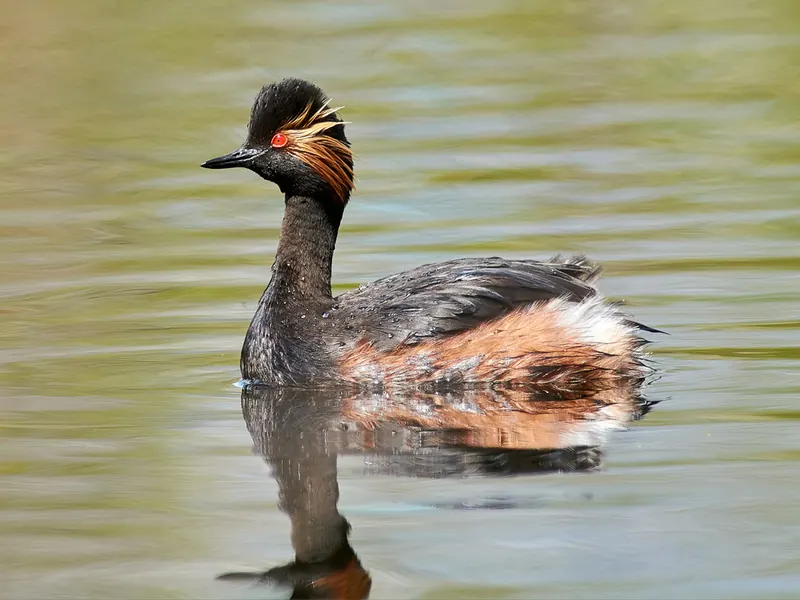
Adult Eared Grebe
Photo: Сергей Неклюдов, CC BY 4.0 via iNaturalist

Eared Grebes arrive in Kansas in the second week of March, peak in mid April (2.0% of checklists), and most are gone by late June.

When to look

First arrivalsMar 8-14the second week of March
Common byMar 8-14the second week of March
PeakApr 15-21mid April
Most gone byJun 22-30late June

Best: mid April. First arrivals the second week of March; most are gone by late June. Peak: on about 2.0% of Kansas checklists.

  1. Janrare
  2. Febnot usually seen
  3. Marcommon
  4. Aprpeak season
  5. Maycommon
  6. Jununcommon
  7. Julrare
  8. Augrare
  9. Sepuncommon
  10. Octuncommon
  11. Novcommon
  12. Decuncommon

Darker months: more checklists report it. Outlined: peak month.

0%1%2%3%Jan 1-7: 0.2% of 8683 checklistsJan 8-14: 0.1% of 5710 checklistsJan 15-21: 0.2% of 5453 checklistsJan 22-31: 0.1% of 7868 checklistsFeb 1-7: 0.1% of 5579 checklistsFeb 8-14: 0.1% of 6307 checklistsFeb 15-21: 0% of 7830 checklistsFeb 22-28: 0.1% of 6124 checklistsMar 1-7: 0.1% of 6442 checklistsMar 8-14: 0.3% of 6925 checklistsMar 15-21: 0.7% of 7257 checklistsMar 22-31: 1.3% of 11527 checklistsApr 1-7: 1.7% of 8908 checklistsApr 8-14: 1.9% of 11070 checklistsApr 15-21: 2.2% of 11050 checklistsApr 22-30: 1.9% of 16381 checklistsMay 1-7: 1.5% of 15899 checklistsMay 8-14: 0.9% of 15349 checklistsMay 15-21: 0.8% of 10474 checklistsMay 22-31: 0.5% of 11264 checklistsJun 1-7: 0.3% of 6783 checklistsJun 8-14: 0.3% of 5654 checklistsJun 15-21: 0.2% of 4716 checklistsJun 22-30: 0.1% of 6232 checklistsJul 1-7: 0.3% of 5073 checklistsJul 8-14: 0.2% of 4528 checklistsJul 15-21: 0.1% of 4210 checklistsJul 22-31: 0.3% of 5986 checklistsAug 1-7: 0.2% of 4661 checklistsAug 8-14: 0.2% of 4762 checklistsAug 15-21: 0.2% of 4823 checklistsAug 22-31: 0.2% of 7214 checklistsSep 1-7: 0.4% of 5989 checklistsSep 8-14: 0.5% of 5549 checklistsSep 15-21: 0.4% of 5255 checklistsSep 22-30: 0.3% of 7370 checklistsOct 1-7: 0.3% of 5829 checklistsOct 8-14: 0.3% of 6183 checklistsOct 15-21: 0.5% of 5504 checklistsOct 22-31: 0.8% of 7289 checklistsNov 1-7: 0.7% of 5535 checklistsNov 8-14: 1.3% of 5462 checklistsNov 15-21: 1.0% of 4929 checklistsNov 22-30: 0.8% of 6627 checklistsDec 1-7: 0.6% of 4670 checklistsDec 8-14: 0.5% of 4805 checklistsDec 15-21: 0.1% of 6341 checklistsDec 22-31: 0.2% of 8186 checklistsJanFebMarAprMayJunJulAugSepOctNovDec
Share of complete checklists reporting it, by week (4 per month). Grey bars: fewer than 10 checklists, not counted.

Frequency is the share of complete checklists in Kansas that listed the bird, 2016–2025. It is not a head count, and it follows where and when people go birding. How to read it.

JanFebMarAprMayJunJulAugSepOctNovDec
today
Second week of November

Each county is shaded by the share of complete checklists there that listed the bird, blended with the weeks either side. Darker is more often. It follows where people watch birds, not how many birds there are. How to read it.

Embed this map on your site

Where in Kansas

Best counties

Share of checklists at the peak
  1. Seward CountyBest late April · 16 checklists that week, 566 in all31%
  2. Graham CountyBest early May · 40 checklists that week, 440 in all19%
  3. Haskell CountyBest early May · 21 checklists that week, 308 in all18%
  4. Stafford CountyBest late April · 442 checklists that week, 6,839 in all17%
  5. Scott CountyBest late April · 58 checklists that week, 1,780 in all15%
  6. Hodgeman CountyBest mid August · 12 checklists that week, 670 in all15%

Best spots

Share of checklists at the peak
  1. Quivira National Wildlife Refuge (southwest)Stafford County, best late April · 25 checklists that week, 384 in all63%
  2. Quivira National Wildlife RefugeStafford County, best late April · 71 checklists that week, 1,247 in all42%
  3. Little Salt MarshStafford County, best late April · 51 checklists that week, 922 in all31%

Busy spots report more of everything; compare the checklist counts before you drive anywhere.

Best time of day

In Kansas, the Eared Grebe is most often listed on checklists started between 1 and 3 pm (1.0% of those checklists).

0%0.5%1%12 am: too few checklists (150) to judge1 am: too few checklists (119) to judge2 am: too few checklists (97) to judge3 am: too few checklists (94) to judge4 am: too few checklists (124) to judge5 am: too few checklists (1459) to judge6 am: 0.4% of 12550 checklists7 am: 0.4% of 34128 checklists8 am: 0.5% of 45960 checklists9 am: 0.6% of 37806 checklists10 am: 0.7% of 32102 checklists11 am: 0.9% of 25896 checklists12 pm: 0.7% of 24203 checklists1 pm: 1.0% of 20269 checklists2 pm: 1.0% of 20772 checklists3 pm: 0.8% of 20978 checklists4 pm: 0.8% of 22094 checklists5 pm: 0.8% of 17739 checklists6 pm: 0.8% of 13963 checklists7 pm: 0.5% of 10110 checklists8 pm: too few checklists (4188) to judge9 pm: too few checklists (968) to judge10 pm: too few checklists (325) to judge11 pm: too few checklists (171) to judge12a3a6a9a12p3p6p9p
Share of checklists started in each local hour that reported it. It reflects when people go birding as well as when birds are active. Grey hours have too few checklists (under 2% of the state’s, or under 200) to judge.
Week-by-week table
MonthDays 1-78-1415-2122-end
January0.2%0.1%0.2%0.1%
February0.1%0.1%0%0.1%
March0.1%0.3%0.7%1.3%
April1.7%1.9%2.2%1.9%
May1.5%0.9%0.8%0.5%
June0.3%0.3%0.2%0.1%
July0.3%0.2%0.1%0.3%
August0.2%0.2%0.2%0.2%
September0.4%0.5%0.4%0.3%
October0.3%0.3%0.5%0.8%
November0.7%1.3%1.0%0.8%
December0.6%0.5%0.1%0.2%

Neighboring states

  • Nebraska: arrives late March, 2 weeks later than Kansas
  • Oklahoma: arrives mid October, 19 weeks earlier than Kansas
  • South Dakota: arrives the second week of April, 4 weeks later than Kansas
  • Colorado: arrives mid March, 1 week later than Kansas

Common questions

When do Eared Grebes arrive in Kansas?
Eared Grebes arrive in Kansas in the second week of March, peak in mid April (2.0% of checklists), and most are gone by late June.
When do Eared Grebes leave Kansas?
Most Eared Grebes have left Kansas by late June, when reports fall below half their usual rate.
When is the best time to see a Eared Grebe in Kansas?
The Eared Grebe is reported most often in mid April, on about 2.0% of Kansas checklists.
Where in Kansas are Eared Grebes seen most often?
By county, Seward County, Graham County, and Haskell County have the highest peak reporting rates for the Eared Grebe (counties with at least 200 checklists).