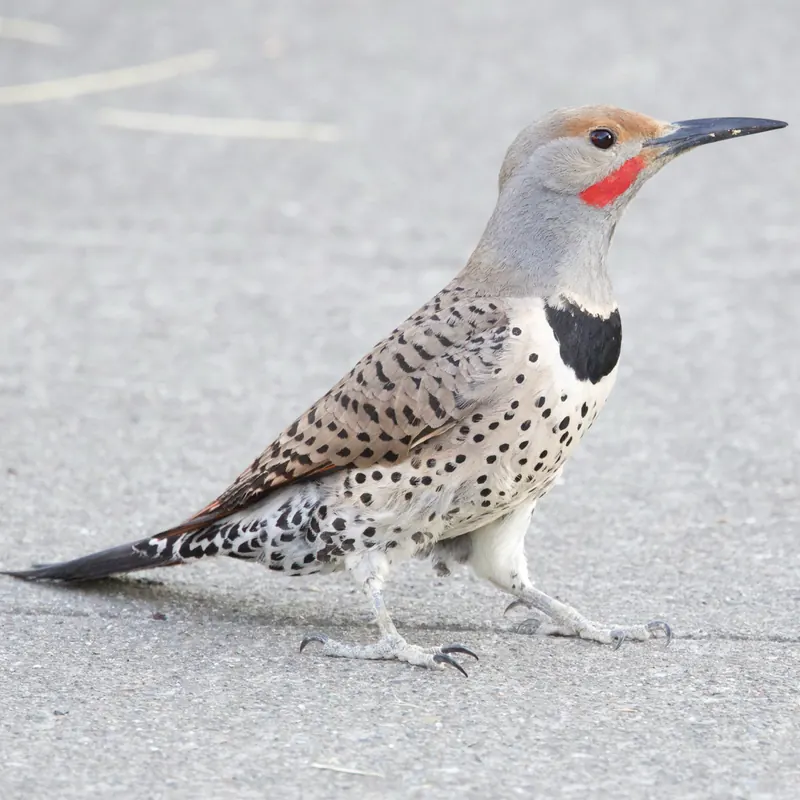
Northern Flickers reach Vermont in early March, are common by early April, peak in late April (25% of checklists), and most are gone by mid October.
When to look
First arrivalsMar 1-7early March
Common byApr 1-7early April
PeakApr 22-30late April
Most gone byOct 15-21mid October
Best: late April. First arrivals early March; most are gone by mid October. Peak: on about 25% of Vermont checklists.
Janrare
Febrare
Maruncommon
Aprpeak season
Maypeak season
Juncommon
Julcommon
Augcommon
Seppeak season
Octcommon
Novrare
Decrare
Darker months: more checklists report it. Outlined: peak month.
Share of complete checklists reporting it, by week (4 per month). Grey bars: fewer than 10 checklists, not counted.
Frequency is the share of complete checklists in Vermont that listed the bird, 2016–2025. It is not a head count, and it follows where and when people go birding. How to read it.
JanFebMarAprMayJunJulAugSepOctNovDec
today
0%few checklistsno data
Each county is shaded by the share of complete checklists there that listed the bird, blended with the weeks either side. Darker is more often. It follows where people watch birds, not how many birds there are. How to read it.
Otter Creek SwampsAddison County, best late April · 35 checklists that week, 254 in all63%
Busy spots report more of everything; compare the checklist counts before you drive anywhere.
Best time of day
In Vermont, the Northern Flicker is most often listed on checklists started between 5 and 7 am (19% of those checklists).
Share of checklists started in each local hour that reported it. It reflects when people go birding as well as when birds are active. Grey hours have too few checklists (under 2% of the state’s, or under 200) to judge.Week-by-week table
Month
Days 1-7
8-14
15-21
22-end
January
1.2%
1.6%
1.4%
1.7%
February
1.3%
1.5%
0.9%
1.5%
March
1.5%
1.7%
2.2%
3.3%
April
5.9%
14%
22%
26%
May
26%
20%
17%
13%
June
12%
12%
12%
13%
July
12%
13%
13%
13%
August
13%
12%
11%
12%
September
16%
21%
25%
24%
October
17%
11%
7.2%
4.8%
November
3.0%
2.9%
2.0%
1.9%
December
1.8%
1.9%
1.6%
1.4%
Neighboring states
New Hampshire: arrives mid March, 2 weeks later than Vermont
Massachusetts: arrives early April, 4 weeks later than Vermont
Connecticut: arrives early September, 24 weeks earlier than Vermont
Rhode Island: arrives mid September, 22 weeks earlier than Vermont
Common questions
When do Northern Flickers arrive in Vermont?
Northern Flickers reach Vermont in early March, are common by early April, peak in late April (25% of checklists), and most are gone by mid October.
When do Northern Flickers leave Vermont?
Most Northern Flickers have left Vermont by mid October, when reports fall below half their usual rate. Stragglers are still reported until early February.
When is the best time to see a Northern Flicker in Vermont?
The Northern Flicker is reported most often in late April, on about 25% of Vermont checklists.
Where in Vermont are Northern Flickers seen most often?
By county, Essex County, Rutland County, and Bennington County have the highest peak reporting rates for the Northern Flicker (counties with at least 200 checklists).