WhenToBird

Catharus fuscescens · Turdidae

When Do Veeries Arrive in Washington?

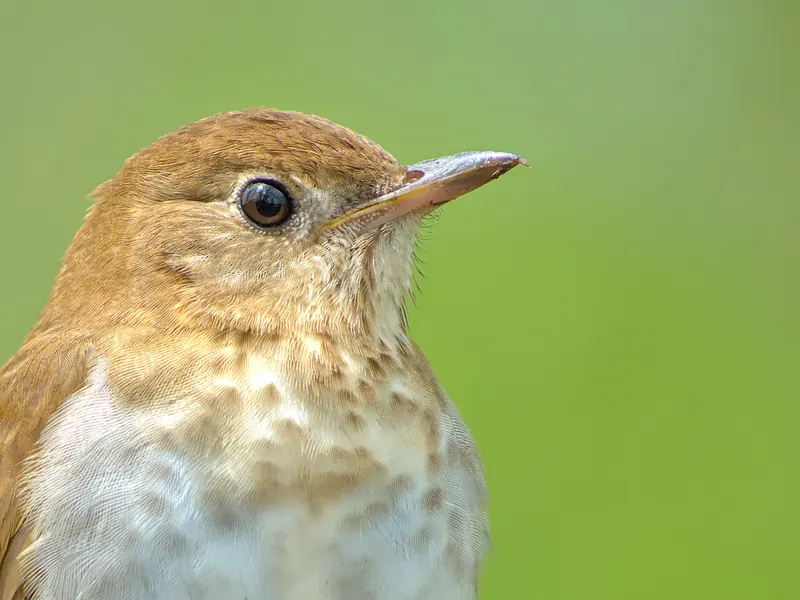
Adult Veery
Photo: Blake Ross, CC BY 4.0 via iNaturalist

Veeries mostly pass through Washington: they arrive in late May, peak in the second week of June (2.0% of checklists), and most are gone by the second week of July.

When to look

First arrivalsMay 22-31late May
Common byMay 22-31late May
PeakJun 8-14the second week of June
Most gone byJul 8-14the second week of July

Best: the second week of June. First arrivals late May; most are gone by the second week of July. Peak: on about 2.0% of Washington checklists.

  1. Jannot usually seen
  2. Febnot usually seen
  3. Marnot usually seen
  4. Aprnot usually seen
  5. Maycommon
  6. Junpeak season
  7. Julcommon
  8. Augrare
  9. Sepnot usually seen
  10. Octnot usually seen
  11. Novnot usually seen
  12. Decnot usually seen

Darker months: more checklists report it. Outlined: peak month.

0%1%2%3%Jan 1-7: 0% of 41928 checklistsJan 8-14: 0% of 31152 checklistsJan 15-21: 0% of 31753 checklistsJan 22-31: 0% of 42530 checklistsFeb 1-7: 0% of 29739 checklistsFeb 8-14: 0% of 32746 checklistsFeb 15-21: 0% of 40328 checklistsFeb 22-28: 0% of 28432 checklistsMar 1-7: 0% of 30758 checklistsMar 8-14: 0% of 29368 checklistsMar 15-21: 0% of 32580 checklistsMar 22-31: 0% of 45614 checklistsApr 1-7: 0% of 33997 checklistsApr 8-14: 0% of 34729 checklistsApr 15-21: 0% of 38474 checklistsApr 22-30: 0% of 52185 checklistsMay 1-7: 0% of 44236 checklistsMay 8-14: 0.1% of 48708 checklistsMay 15-21: 0.3% of 41742 checklistsMay 22-31: 1.4% of 57082 checklistsJun 1-7: 2.1% of 39193 checklistsJun 8-14: 2.2% of 36042 checklistsJun 15-21: 1.8% of 34003 checklistsJun 22-30: 1.5% of 39711 checklistsJul 1-7: 1.2% of 31949 checklistsJul 8-14: 1.0% of 29086 checklistsJul 15-21: 0.4% of 28045 checklistsJul 22-31: 0.1% of 38275 checklistsAug 1-7: 0.1% of 28846 checklistsAug 8-14: 0.1% of 28036 checklistsAug 15-21: 0.1% of 27614 checklistsAug 22-31: 0.1% of 40356 checklistsSep 1-7: 0.1% of 31214 checklistsSep 8-14: 0% of 27795 checklistsSep 15-21: 0% of 29677 checklistsSep 22-30: 0% of 35241 checklistsOct 1-7: 0% of 28605 checklistsOct 8-14: 0% of 28655 checklistsOct 15-21: 0% of 24643 checklistsOct 22-31: 0% of 34874 checklistsNov 1-7: 0% of 25658 checklistsNov 8-14: 0% of 25700 checklistsNov 15-21: 0% of 24331 checklistsNov 22-30: 0% of 32784 checklistsDec 1-7: 0% of 24099 checklistsDec 8-14: 0% of 23339 checklistsDec 15-21: 0% of 27666 checklistsDec 22-31: 0% of 42130 checklistsJanFebMarAprMayJunJulAugSepOctNovDec
Share of complete checklists reporting it, by week (4 per month). Grey bars: fewer than 10 checklists, not counted.

Frequency is the share of complete checklists in Washington that listed the bird, 2016–2025. It is not a head count, and it follows where and when people go birding. How to read it.

JanFebMarAprMayJunJulAugSepOctNovDec
today
Second week of November

Each county is shaded by the share of complete checklists there that listed the bird, blended with the weeks either side. Darker is more often. It follows where people watch birds, not how many birds there are. How to read it.

Embed this map on your site

Where in Washington

Best counties

Share of checklists at the peak
  1. Ferry CountyBest mid June · 196 checklists that week, 5,106 in all20%
  2. Columbia CountyBest the second week of July · 43 checklists that week, 1,894 in all18%
  3. Kittitas CountyBest the second week of June · 1083 checklists that week, 26,338 in all12%
  4. Okanogan CountyBest the second week of June · 1202 checklists that week, 23,048 in all12%
  5. Stevens CountyBest the second week of June · 329 checklists that week, 7,596 in all10%
  6. Yakima CountyBest the second week of June · 1006 checklists that week, 28,504 in all9.6%

Best spots

Share of checklists at the peak
  1. Myrna ParkSpokane County, best late May · 20 checklists that week, 133 in all78%
  2. Blackbird Island ParkChelan County, best mid June · 24 checklists that week, 531 in all75%
  3. Kamiak Butte County ParkWhitman County, best the second week of June · 33 checklists that week, 473 in all65%
  4. Loth241Spokane County, best late May · 20 checklists that week, 205 in all64%
  5. Washington State Department of Natural Resources (WADNR) State Resource Management Area (Dry Creek)Yakima County, best mid June · 40 checklists that week, 617 in all63%

Busy spots report more of everything; compare the checklist counts before you drive anywhere.

Best time of day

In Washington, the Veery is most often listed on checklists started between 6 and 8 am (0.6% of those checklists).

0%0.5%1%12 am: too few checklists (796) to judge1 am: too few checklists (776) to judge2 am: too few checklists (709) to judge3 am: too few checklists (901) to judge4 am: too few checklists (3221) to judge5 am: too few checklists (16576) to judge6 am: 0.9% of 56744 checklists7 am: 0.5% of 133294 checklists8 am: 0.3% of 184196 checklists9 am: 0.3% of 186303 checklists10 am: 0.2% of 177063 checklists11 am: 0.2% of 154936 checklists12 pm: 0.1% of 138061 checklists1 pm: 0.1% of 127449 checklists2 pm: 0.1% of 121511 checklists3 pm: 0.2% of 107793 checklists4 pm: 0.2% of 82862 checklists5 pm: 0.2% of 57183 checklists6 pm: 0.4% of 39886 checklists7 pm: too few checklists (26969) to judge8 pm: too few checklists (12427) to judge9 pm: too few checklists (3658) to judge10 pm: too few checklists (1500) to judge11 pm: too few checklists (834) to judge12a3a6a9a12p3p6p9p
Share of checklists started in each local hour that reported it. It reflects when people go birding as well as when birds are active. Grey hours have too few checklists (under 2% of the state’s, or under 200) to judge.
Week-by-week table
MonthDays 1-78-1415-2122-end
January0%0%0%0%
February0%0%0%0%
March0%0%0%0%
April0%0%0%0%
May0%0.1%0.3%1.4%
June2.1%2.2%1.8%1.5%
July1.2%1.0%0.4%0.1%
August0.1%0.1%0.1%0.1%
September0.1%0%0%0%
October0%0%0%0%
November0%0%0%0%
December0%0%0%0%

Neighboring states

  • Idaho: arrives late May, in the same week than Washington
  • Montana: arrives mid May, 1 week earlier than Washington
  • North Dakota: arrives the second week of May, 2 weeks earlier than Washington
  • South Dakota: arrives the second week of May, 2 weeks earlier than Washington

Common questions

When do Veeries arrive in Washington?
Veeries mostly pass through Washington: they arrive in late May, peak in the second week of June (2.0% of checklists), and most are gone by the second week of July.
When do Veeries leave Washington?
Most Veeries have left Washington by the second week of July, when reports fall below half their usual rate.
When is the best time to see a Veery in Washington?
The Veery is reported most often in the second week of June, on about 2.0% of Washington checklists.
Where in Washington are Veeries seen most often?
By county, Ferry County, Columbia County, and Kittitas County have the highest peak reporting rates for the Veery (counties with at least 200 checklists).