Turkey Vulture · Cathartes aura
When Do Vultures Arrive in North Dakota?
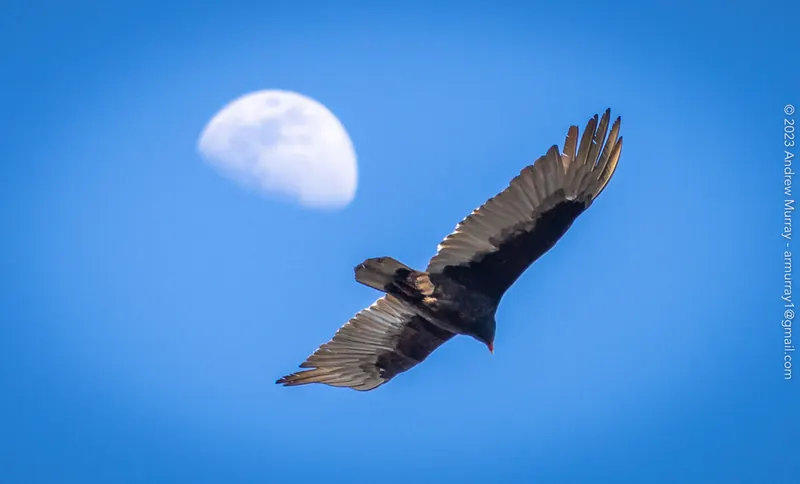
Turkey Vultures reach North Dakota in late March, are common by the second week of April, peak in the second week of September (12% of checklists), and most are gone by early October. They are the only regular vultures in North Dakota.
When to look
First arrivalsMar 22-31late March
Common byApr 8-14the second week of April
PeakSep 8-14the second week of September
Most gone byOct 1-7early October
Best: the second week of September. First arrivals late March; most are gone by early October. Peak: on about 12% of North Dakota checklists.
- Jannot usually seen
- Febnot usually seen
- Marrare
- Aprcommon
- Maycommon
- Junpeak season
- Julpeak season
- Augpeak season
- Seppeak season
- Octcommon
- Novnot usually seen
- Decnot usually seen
Darker months: more checklists report it. Outlined: peak month.
Vultures in North Dakota, species by species
| Species | First arrivals | Peak | Most gone by | Peak % |
|---|---|---|---|---|
| Turkey Vulture | Mar 22-31 | Sep 8-14 | Oct 1-7 | 12% |
- Turkey Vulture
Frequency is the share of complete checklists in North Dakota that listed the bird, 2016–2025. It is not a head count, and it follows where and when people go birding. How to read it.
Where in North Dakota
Best counties for Turkey Vulture
Share of checklists at the peak- Sioux County62%
- Grant County38%
- Dunn County35%
- Mercer County35%
- Emmons County34%
- Adams County30%
Common questions
- When do vultures arrive in North Dakota?
- Turkey Vultures reach North Dakota in late March, are common by the second week of April, peak in the second week of September (12% of checklists), and most are gone by early October. They are the only regular vultures in North Dakota.
- When do vultures leave North Dakota?
- Most Turkey Vultures have left North Dakota by early October, when reports fall below half their usual rate. Stragglers are still reported until the second week of October.
- When is the best time to see vultures in North Dakota?
- The Turkey Vulture is reported most often in the second week of September, on about 12% of North Dakota checklists.