WhenToBird

Sphyrapicus varius · Picidae

When Do Yellow-bellied Sapsuckers Arrive in Vermont?

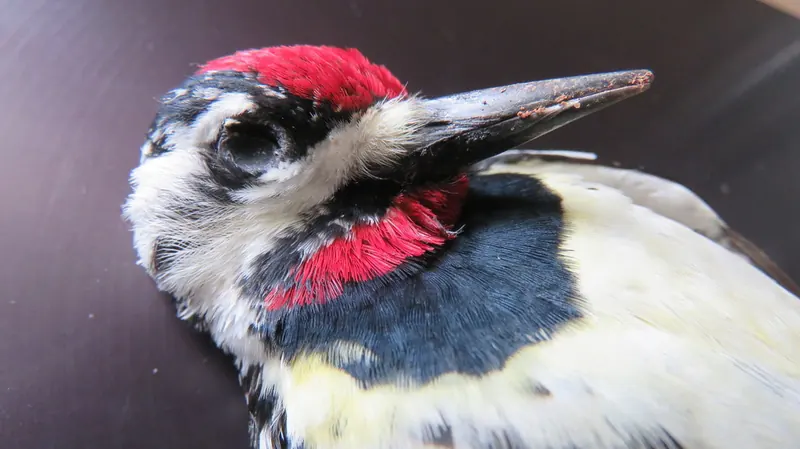
Adult male Yellow-bellied Sapsucker
Photo: Barry Cottam, CC BY 4.0 via iNaturalist

Yellow-bellied Sapsuckers reach Vermont in late March, are common by the second week of April, peak in early May (21% of checklists), and most are gone by late September.

When to look

First arrivalsMar 22-31late March
Common byApr 8-14the second week of April
PeakMay 1-7early May
Most gone bySep 22-30late September

Best: early May. First arrivals late March; most are gone by late September. Peak: on about 21% of Vermont checklists.

  1. Jannot usually seen
  2. Febnot usually seen
  3. Marrare
  4. Aprpeak season
  5. Maypeak season
  6. Juncommon
  7. Julcommon
  8. Auguncommon
  9. Sepcommon
  10. Octuncommon
  11. Novnot usually seen
  12. Decnot usually seen

Darker months: more checklists report it. Outlined: peak month.

0%10%20%30%Jan 1-7: 0.3% of 12234 checklistsJan 8-14: 0.5% of 8293 checklistsJan 15-21: 0.5% of 7885 checklistsJan 22-31: 0.5% of 10534 checklistsFeb 1-7: 0.6% of 7212 checklistsFeb 8-14: 0.1% of 8144 checklistsFeb 15-21: 0.3% of 10480 checklistsFeb 22-28: 0.2% of 7932 checklistsMar 1-7: 0.1% of 8192 checklistsMar 8-14: 0.1% of 9383 checklistsMar 15-21: 0.2% of 10620 checklistsMar 22-31: 0.5% of 16257 checklistsApr 1-7: 3.5% of 12568 checklistsApr 8-14: 14% of 14677 checklistsApr 15-21: 21% of 14106 checklistsApr 22-30: 21% of 19617 checklistsMay 1-7: 22% of 18143 checklistsMay 8-14: 22% of 19626 checklistsMay 15-21: 20% of 17779 checklistsMay 22-31: 17% of 20310 checklistsJun 1-7: 14% of 11493 checklistsJun 8-14: 13% of 10215 checklistsJun 15-21: 14% of 9951 checklistsJun 22-30: 16% of 11050 checklistsJul 1-7: 16% of 8690 checklistsJul 8-14: 14% of 7679 checklistsJul 15-21: 9.4% of 7687 checklistsJul 22-31: 7.8% of 10712 checklistsAug 1-7: 7.0% of 7703 checklistsAug 8-14: 5.9% of 7743 checklistsAug 15-21: 5.6% of 8314 checklistsAug 22-31: 5.1% of 12428 checklistsSep 1-7: 6.5% of 9526 checklistsSep 8-14: 7.7% of 8493 checklistsSep 15-21: 9.1% of 8283 checklistsSep 22-30: 9.1% of 10352 checklistsOct 1-7: 7.5% of 8802 checklistsOct 8-14: 2.8% of 9088 checklistsOct 15-21: 0.9% of 7739 checklistsOct 22-31: 0.6% of 10907 checklistsNov 1-7: 0.3% of 7868 checklistsNov 8-14: 0.4% of 7223 checklistsNov 15-21: 0.5% of 7224 checklistsNov 22-30: 0.6% of 8375 checklistsDec 1-7: 0.6% of 6580 checklistsDec 8-14: 0.5% of 6800 checklistsDec 15-21: 0.6% of 8334 checklistsDec 22-31: 0.7% of 10579 checklistsJanFebMarAprMayJunJulAugSepOctNovDec
Share of complete checklists reporting it, by week (4 per month). Grey bars: fewer than 10 checklists, not counted.

Frequency is the share of complete checklists in Vermont that listed the bird, 2016–2025. It is not a head count, and it follows where and when people go birding. How to read it.

JanFebMarAprMayJunJulAugSepOctNovDec
today
Second week of November

Each county is shaded by the share of complete checklists there that listed the bird, blended with the weeks either side. Darker is more often. It follows where people watch birds, not how many birds there are. How to read it.

Embed this map on your site

Where in Vermont

Best counties

Share of checklists at the peak
  1. Washington CountyBest early May · 1289 checklists that week, 37,036 in all33%
  2. Orange CountyBest early May · 654 checklists that week, 16,964 in all33%
  3. Essex CountyBest early May · 196 checklists that week, 9,416 in all32%
  4. Caledonia CountyBest the second week of May · 342 checklists that week, 10,534 in all31%
  5. Windsor CountyBest late April · 3005 checklists that week, 73,702 in all27%
  6. Windham CountyBest early May · 1903 checklists that week, 39,105 in all26%

Best spots

Share of checklists at the peak
  1. Hinesburg Town ForestChittenden County, best late April · 23 checklists that week, 482 in all94%
  2. Missisquoi National Wildlife Refuge (Black Creek)Franklin County, best late April · 22 checklists that week, 577 in all90%
  3. Camels Hump State ForestChittenden County, best the second week of May · 22 checklists that week, 299 in all87%
  4. Laplatte Headwaters Town ForestChittenden County, best early May · 21 checklists that week, 722 in all83%
  5. Danby PondRutland County, best the second week of May · 37 checklists that week, 551 in all81%
  6. Marsh-Billings-Rockefeller National Historical ParkWindsor County, best late April · 20 checklists that week, 401 in all79%

Busy spots report more of everything; compare the checklist counts before you drive anywhere.

Best time of day

In Vermont, the Yellow-bellied Sapsucker is most often listed on checklists started between 5 and 7 am (18% of those checklists).

0%5%10%15%20%12 am: too few checklists (384) to judge1 am: too few checklists (418) to judge2 am: too few checklists (568) to judge3 am: too few checklists (1183) to judge4 am: too few checklists (3460) to judge5 am: 19% of 10340 checklists6 am: 18% of 30951 checklists7 am: 13% of 64150 checklists8 am: 11% of 70252 checklists9 am: 8.9% of 55280 checklists10 am: 6.8% of 47111 checklists11 am: 5.1% of 37615 checklists12 pm: 4.7% of 32195 checklists1 pm: 4.5% of 30185 checklists2 pm: 4.2% of 29679 checklists3 pm: 4.0% of 26483 checklists4 pm: 5.1% of 20110 checklists5 pm: 5.4% of 15993 checklists6 pm: 5.7% of 12110 checklists7 pm: too few checklists (8203) to judge8 pm: too few checklists (4425) to judge9 pm: too few checklists (1829) to judge10 pm: too few checklists (597) to judge11 pm: too few checklists (309) to judge12a3a6a9a12p3p6p9p
Share of checklists started in each local hour that reported it. It reflects when people go birding as well as when birds are active. Grey hours have too few checklists (under 2% of the state’s, or under 200) to judge.
Week-by-week table
MonthDays 1-78-1415-2122-end
January0.3%0.5%0.5%0.5%
February0.6%0.1%0.3%0.2%
March0.1%0.1%0.2%0.5%
April3.5%14%21%21%
May22%22%20%17%
June14%13%14%16%
July16%14%9.4%7.8%
August7.0%5.9%5.6%5.1%
September6.5%7.7%9.1%9.1%
October7.5%2.8%0.9%0.6%
November0.3%0.4%0.5%0.6%
December0.6%0.5%0.6%0.7%

Neighboring states

  • New Hampshire: arrives late March, in the same week than Vermont
  • Massachusetts: arrives late March, in the same week than Vermont
  • Connecticut: arrives early September, 21 weeks later than Vermont
  • Rhode Island: arrives late September, 24 weeks earlier than Vermont

Common questions

When do Yellow-bellied Sapsuckers arrive in Vermont?
Yellow-bellied Sapsuckers reach Vermont in late March, are common by the second week of April, peak in early May (21% of checklists), and most are gone by late September.
When do Yellow-bellied Sapsuckers leave Vermont?
Most Yellow-bellied Sapsuckers have left Vermont by late September, when reports fall below half their usual rate. Stragglers are still reported until mid October.
When is the best time to see a Yellow-bellied Sapsucker in Vermont?
The Yellow-bellied Sapsucker is reported most often in early May, on about 21% of Vermont checklists.
Where in Vermont are Yellow-bellied Sapsuckers seen most often?
By county, Washington County, Orange County, and Essex County have the highest peak reporting rates for the Yellow-bellied Sapsucker (counties with at least 200 checklists).