WhenToBird

Polioptila caerulea · Polioptilidae

When Do Blue-gray Gnatcatchers Arrive in Indiana?

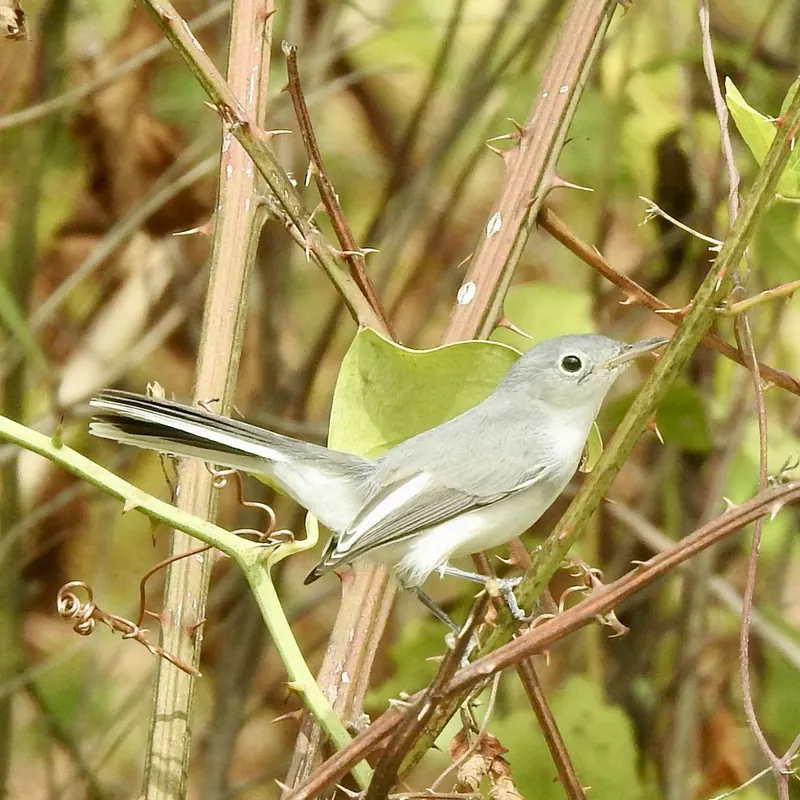
Adult Blue-gray Gnatcatcher
Photo: Laura Clark, CC BY 4.0 via iNaturalist

Blue-gray Gnatcatchers reach Indiana in early April, are common by the second week of April, peak in early May (34% of checklists), and most are gone by early September.

When to look

First arrivalsApr 1-7early April
Common byApr 8-14the second week of April
PeakMay 1-7early May
Most gone bySep 1-7early September

Best: early May. First arrivals early April; most are gone by early September. Peak: on about 34% of Indiana checklists.

  1. Jannot usually seen
  2. Febnot usually seen
  3. Marrare
  4. Aprpeak season
  5. Maypeak season
  6. Juncommon
  7. Julcommon
  8. Auguncommon
  9. Sepuncommon
  10. Octnot usually seen
  11. Novnot usually seen
  12. Decnot usually seen

Darker months: more checklists report it. Outlined: peak month.

0%10%20%30%40%Jan 1-7: 0% of 18123 checklistsJan 8-14: 0% of 12006 checklistsJan 15-21: 0% of 12403 checklistsJan 22-31: 0% of 16181 checklistsFeb 1-7: 0% of 12546 checklistsFeb 8-14: 0% of 14250 checklistsFeb 15-21: 0% of 18077 checklistsFeb 22-28: 0% of 13590 checklistsMar 1-7: 0% of 14545 checklistsMar 8-14: 0% of 14594 checklistsMar 15-21: 0.1% of 13894 checklistsMar 22-31: 0.5% of 22400 checklistsApr 1-7: 3.8% of 18069 checklistsApr 8-14: 13% of 19579 checklistsApr 15-21: 26% of 19518 checklistsApr 22-30: 34% of 30544 checklistsMay 1-7: 35% of 28430 checklistsMay 8-14: 33% of 30624 checklistsMay 15-21: 31% of 22920 checklistsMay 22-31: 24% of 21234 checklistsJun 1-7: 18% of 12279 checklistsJun 8-14: 17% of 10904 checklistsJun 15-21: 17% of 9488 checklistsJun 22-30: 16% of 11362 checklistsJul 1-7: 15% of 9947 checklistsJul 8-14: 13% of 9585 checklistsJul 15-21: 11% of 8929 checklistsJul 22-31: 11% of 12639 checklistsAug 1-7: 9.9% of 9528 checklistsAug 8-14: 9.1% of 9451 checklistsAug 15-21: 10% of 9442 checklistsAug 22-31: 12% of 14969 checklistsSep 1-7: 12% of 12628 checklistsSep 8-14: 7.6% of 11793 checklistsSep 15-21: 3.5% of 11396 checklistsSep 22-30: 0.9% of 14203 checklistsOct 1-7: 0.1% of 11365 checklistsOct 8-14: 0.1% of 12092 checklistsOct 15-21: 0.1% of 10440 checklistsOct 22-31: 0.1% of 13883 checklistsNov 1-7: 0.1% of 10476 checklistsNov 8-14: 0.1% of 9776 checklistsNov 15-21: 0.1% of 9035 checklistsNov 22-30: 0% of 12547 checklistsDec 1-7: 0% of 9078 checklistsDec 8-14: 0% of 8732 checklistsDec 15-21: 0% of 11024 checklistsDec 22-31: 0.1% of 15432 checklistsJanFebMarAprMayJunJulAugSepOctNovDec
Share of complete checklists reporting it, by week (4 per month). Grey bars: fewer than 10 checklists, not counted.

Frequency is the share of complete checklists in Indiana that listed the bird, 2016–2025. It is not a head count, and it follows where and when people go birding. How to read it.

JanFebMarAprMayJunJulAugSepOctNovDec
today
Second week of November

Each county is shaded by the share of complete checklists there that listed the bird, blended with the weeks either side. Darker is more often. It follows where people watch birds, not how many birds there are. How to read it.

Embed this map on your site

Where in Indiana

Best counties

Share of checklists at the peak
  1. Fountain CountyBest the second week of May · 14 checklists that week, 397 in all60%
  2. Scott CountyBest the second week of May · 24 checklists that week, 798 in all59%
  3. Crawford CountyBest mid April · 33 checklists that week, 891 in all57%
  4. Pike CountyBest late April · 150 checklists that week, 2,105 in all57%
  5. Martin CountyBest mid April · 37 checklists that week, 934 in all56%
  6. Vanderburgh CountyBest mid April · 692 checklists that week, 18,940 in all56%

Best spots

Share of checklists at the peak
  1. Southwestway ParkMarion County, best late April · 24 checklists that week, 480 in all96%
  2. Scales Lake State BeachWarrick County, best mid April · 31 checklists that week, 645 in all95%
  3. Marrot Park Woods Nature PreserveMarion County, best the second week of May · 33 checklists that week, 343 in all94%
  4. Wesselman Park Woods Nature PreserveVanderburgh County, best late April · 53 checklists that week, 343 in all94%
  5. ThornwoodHancock County, best early May · 99 checklists that week, 1,357 in all93%

Busy spots report more of everything; compare the checklist counts before you drive anywhere.

Best time of day

In Indiana, the Blue-gray Gnatcatcher is most often listed on checklists started between 6 and 8 am (18% of those checklists).

0%10%20%30%12 am: too few checklists (240) to judge1 am: too few checklists (231) to judge2 am: too few checklists (222) to judge3 am: too few checklists (202) to judge4 am: too few checklists (674) to judge5 am: too few checklists (4329) to judge6 am: 24% of 20589 checklists7 am: 15% of 58470 checklists8 am: 12% of 86931 checklists9 am: 11% of 78239 checklists10 am: 8.9% of 66080 checklists11 am: 8.3% of 54904 checklists12 pm: 7.6% of 47610 checklists1 pm: 7.5% of 44814 checklists2 pm: 7.5% of 43790 checklists3 pm: 7.7% of 42983 checklists4 pm: 8.1% of 45349 checklists5 pm: 9.3% of 35993 checklists6 pm: 12% of 26447 checklists7 pm: 10% of 17740 checklists8 pm: too few checklists (7603) to judge9 pm: too few checklists (1721) to judge10 pm: too few checklists (517) to judge11 pm: too few checklists (272) to judge12a3a6a9a12p3p6p9p
Share of checklists started in each local hour that reported it. It reflects when people go birding as well as when birds are active. Grey hours have too few checklists (under 2% of the state’s, or under 200) to judge.
Week-by-week table
MonthDays 1-78-1415-2122-end
January0%0%0%0%
February0%0%0%0%
March0%0%0.1%0.5%
April3.8%13%26%34%
May35%33%31%24%
June18%17%17%16%
July15%13%11%11%
August9.9%9.1%10%12%
September12%7.6%3.5%0.9%
October0.1%0.1%0.1%0.1%
November0.1%0.1%0.1%0%
December0%0%0%0.1%

Neighboring states

  • Illinois: arrives early April, in the same week than Indiana
  • Kentucky: arrives late March, 1 week earlier than Indiana
  • Ohio: arrives early April, in the same week than Indiana
  • Michigan: arrives the second week of April, 1 week later than Indiana

Common questions

When do Blue-gray Gnatcatchers arrive in Indiana?
Blue-gray Gnatcatchers reach Indiana in early April, are common by the second week of April, peak in early May (34% of checklists), and most are gone by early September.
When do Blue-gray Gnatcatchers leave Indiana?
Most Blue-gray Gnatcatchers have left Indiana by early September, when reports fall below half their usual rate. Stragglers are still reported until mid September.
When is the best time to see a Blue-gray Gnatcatcher in Indiana?
The Blue-gray Gnatcatcher is reported most often in early May, on about 34% of Indiana checklists.
Where in Indiana are Blue-gray Gnatcatchers seen most often?
By county, Fountain County, Scott County, and Crawford County have the highest peak reporting rates for the Blue-gray Gnatcatcher (counties with at least 200 checklists).