November 8, 2026
Winter Finch Forecast 2026-27: Which Northern Birds Will Reach Your Feeders
Poor seed crops in the central boreal forest mean pine siskins, evening grosbeaks and crossbills should reach the Northeast and Great Lakes this winter.
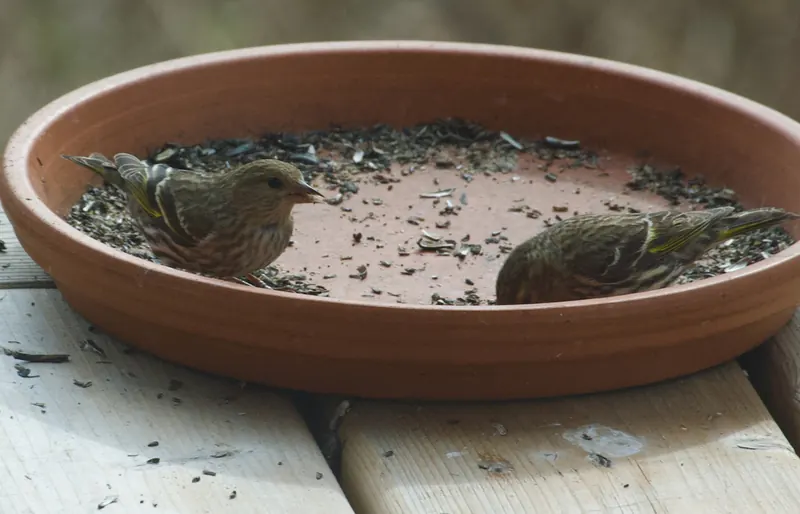
The 2026-27 Winter Finch Forecast says northern finches should push into eastern Canada, the Great Lakes and the northeastern states this winter, and that big flights into the Southeast are unlikely. The pattern comes from seed crops: they are poor across a huge swath of the central boreal forest and good in the east, so birds that would normally stay up north have reasons to move.
That is the short version. Here is what it means species by species, what to put in your feeders, and how to tell whether the flight is reaching you.
Where the forecast comes from
Every fall, the Finch Research Network publishes a winter finch forecast built from surveys of cone, seed and berry crops across Canada. Finches such as siskins, crossbills and redpolls follow food. When spruce cones, birch seeds and mountain-ash berries are abundant, they stay home. When crops fail, they move south, sometimes by the thousand. Ornithologists call these big, irregular movements irruptions.
This year's forecast describes poor crops in a broad band from western Manitoba to Alberta and across the central boreal, with very good crops of eastern white pine and northern white cedar, and good oak and beechnut crops, in the east. The boreal failure is the push; the eastern crops are the pull.
What to expect, species by species
Pine Siskin. A sizable irruption is expected in the northeastern states, with a possible small to moderate flight into the Southeast. Siskins are the most likely finch to show up at feeders well south of their usual range, and they often arrive in flocks.
Evening Grosbeak. Small to medium flocks are expected in the Northeast and Great Lakes, with a small movement south into New York, Pennsylvania and Massachusetts possible. If you have never seen one, this could be your year; a flock of these will empty a tray of sunflower seed in an hour.
White-winged and Red Crossbill. A small to moderate push of White-winged Crossbills into the east is forecast, and a significant Red Crossbill irruption is already underway. Crossbills feed in conifers, so look for them in spruce and pine stands, and on gravel roads where they pick up grit and salt.
Purple Finch. Many are expected to stay in eastern Canada, the Great Lakes and the Northeast. A southern flight is possible but would be small and late.
Common Redpoll. A small flight is possible, especially in the western Great Lakes, but no big one is expected. If redpolls do come, check the flock carefully for the paler Hoary Redpoll.
Pine Grosbeak and Bohemian Waxwing. Not expected to move south much. A good mountain-ash crop gives the waxwings a reason to stay north.
Red-breasted Nuthatch and Blue Jay. Not finches, but they are part of the forecast. No large nuthatch flight to the Southeast is expected, while above-average Blue Jay flights are expected along the north shores of Lakes Ontario and Erie.
What these birds usually look like in your state
A forecast tells you about this winter. The charts below show the average over 2016 to 2025, which smooths out the boom years and the bust years. Think of them as the baseline: the bars show how often each species turns up on checklists in a normal winter, and an irruption year is the one where the winter bars run higher than you see here.
Pine Siskin in Pennsylvania
Evening Grosbeak in New York
Purple Finch in Michigan
Redpoll in Minnesota
Compare a chart like these with one for a resident such as the chickadee. Evening grosbeaks and redpolls only reach most of the lower 48 in winter, and in many years barely at all, so their bars can be low and uneven from one winter to the next. That is the signature of an irruptive species.
What to put in the feeder
You do not need special gear.
- Black oil sunflower seed draws evening grosbeaks, purple finches and siskins. Hulled sunflower chips work too and leave less mess.
- Nyjer (thistle) seed in a tube feeder with small ports suits siskins and redpolls.
- Pine cones and conifers. Crossbills will not come to a feeder, but a stand of spruce or pine that holds cones is worth a stop.
- Grit and salt. Evening grosbeaks and crossbills seek out road salt and grit in winter. If you see finches working a gravel shoulder, slow down and look; but pull off the road before you stop.
Keep the feeders clean
Pine siskins in particular are prone to salmonellosis at crowded feeders. Project FeederWatch recommends cleaning feeders regularly and more often when birds are concentrated: scrub them, soak in a weak bleach solution (about one part bleach to nine parts water), rinse well and let them dry completely. If you find dead or obviously sick birds, take your feeders down for a couple of weeks. The birds will find natural food and move on, and you can put the feeders back once things are quiet.
How to know whether the flight has reached you
Forecasts are educated guesses. Some years the predicted flight never materializes, and sometimes birds show up that nobody predicted. The best check is real reports from near you. Look at recent sightings of siskins and grosbeaks in your county, and ask local birders, who often start talking about the first flock as soon as it appears.
Finch flights tend to come in waves, with the first birds appearing in the fall, more in December and January, and sometimes a second wave in late winter if natural food runs short. If your feeders are quiet in November, keep them stocked and watch the reports through February.
Check your own winter birds
If you want to see what a normal winter looks like where you live, see the winter birds in your state page, or open the species pages for Pine Siskin and Evening Grosbeak to compare week by week across states. For the bigger picture of which birds stay put and which ones come and go, read what birds stay for the winter.
Related
- Pine Siskin: when and where, by state
- Evening Grosbeak: when and where, by state
- Purple Finch: when and where, by state
- Redpoll: when and where, by state
- Birds in New York, month by month
- Best birding spots in New York
- Birds in Pennsylvania, month by month
- Best birding spots in Pennsylvania
- Birds in Michigan, month by month
- Best birding spots in Michigan
- Birds in Massachusetts, month by month
- Best birding spots in Massachusetts
- Birds in Minnesota, month by month
- Best birding spots in Minnesota
- Birds in Wisconsin, month by month
- Best birding spots in Wisconsin
Tags: winter, finches, irruptions, feeders